Showing posts with label Grub Busters for Your Kitchen Gardener. Show all posts

Wednesday, August 3, 2011

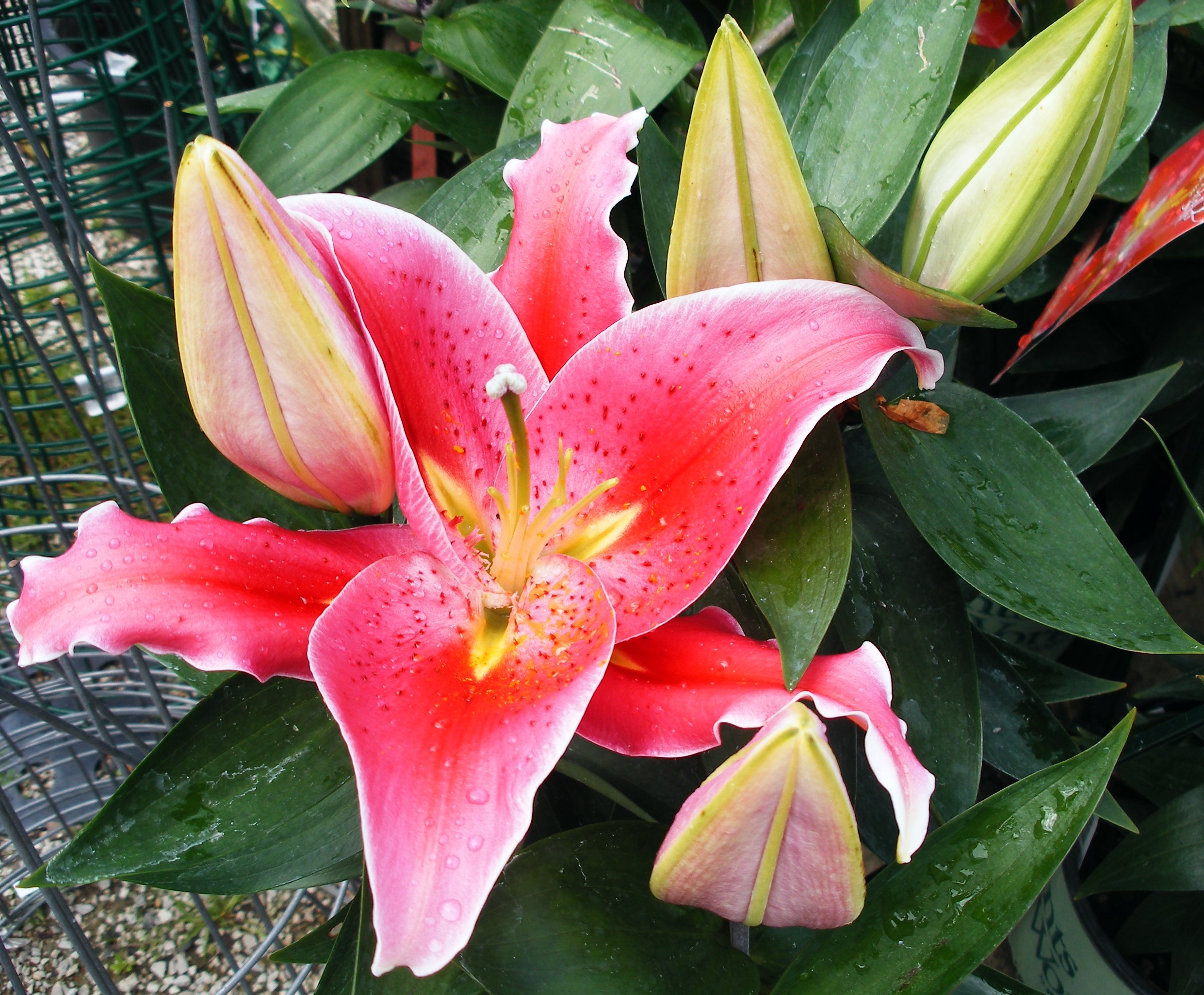
Cut lilies

Cut lilies

Whether you grow your own or purchase them,  lilies make great cut flowers to use in a vase or floral arrangements.

When cutting fresh lilies from your garden to enjoy indoors,  leave 1/2 to 2/3 of the stem of the plant so it will not harm the plant for future bloom.
Care
For maximum enjoyment, cut them early in the morning,  when they
are just about to open. Use a sharp knife or shears for a clean cut. Remove lower leaves that may be underwater and place your cut flowers in tepid water with floral preservative.
When the buds start to open,  remove the anthers (male part of the plant with the yellow pollen). This will lenghten the life span of the flowers and avoid petal stain.
Take care not to get pollen on your clothes as it will also stain. If you do, brush it off with a dry paper towel, that should remove most of  it.
Store your lilies in a cool room away from direct sun, cold drafts and heating vents.
Tight budsIf the buds are tight and you need opened flowers, here’s something you can do to coax them to open.
Recut the stems and place them in lukewarm water with cut flower food. Warmer water will open them faster.   Another trick is to place a plastic bag over the whole bucket of stems to increase the humidity and temperature. The cut lilies should start to open in a day or so. Keep the bucket away from direct sun until you remove the plastic cover. When the buds start to open, remove the pollen from the stamens. This will prolong freshness and avoid any pollen stains. 
If the buds don’t open, they may have been damaged from poor storage such as ethylene gas exposure. If the lilies start to open too fast, place them in a cooler environment away from light.
Optimally, cut lily* stems should last 7-14 days.  Individual flowers last 4-7 days.
*depends on variety

Monday, July 25, 2011

2011 July ... Results


So, what do you think?  The soil left by the removal of the huge Spruce tree was not conducive to a good garden. I just followed the guidelines available in my ebook.  Next year will be exciting as the soil gets rid of the detriments, gravel, or whatever that was under that beautiful Spruce tree. I really miss the tree but this small garden is another attractive addition to my lot...so the neighbors say.

The rhubarb is even better than last year. Maybe you know or maybe not but adding a handful of strawberries into the pot when you prepare the rhubarb, along with a little honey, really creates an awesome desert. I love the tart taste so I don't add much honey.

The beans are delicious when prepared with a little margarine or butter.
Maybe next year the asparagus will satisfy. We used to pick a lot of wild asparagus in our apple orchards. It was always fat. Mom would just remove the upper part, breaking it off just where it became crisp and would easily snap when bent. I know it takes at least three years to become a quality plant. Have to learn to be patient.
Barrymor

Tuesday, August 10, 2010

Ease the Transition between Home and Garden

   "I treat nurseries like showrooms," says Patricia Wheeler, president of an interior design firm in Orlando, Florida, USA.
   "I show clients plants and pots. I ask what colors please them. What shapes and textures. I like to get a sense of their exterior style, just like I do with interiors."
   The disconnect between interior and exterior spaces in many homes has always bothered Wheeler.
   "I do beautiful interiors. Landscapers do beautiful exteriors. but between them I see decks, patios, pool areas that are quite bare." she says.
   To soften the harsh transition between home and garden she has been experimenting with container gardens, using potted plants as small accent pieces and major design components on porches, pool decks and terraces, and as a welcoming statement at the front door.
   The placement of the correct plant in the right container, incorporating color, size and style, can make a powerful design statement, she says.
   And container gardens are especially suited to areas with a climate like that of Florida, where plants can be selected to produce blooms or colorful foliage year around.
   The daughter of a Minnesota grain farmer and a mother who loved to garden, Wheeler grew up with what she calls a "gardening habit."  She planted trees and flowers, in the yard of her first Florida home in 1983. But it wasn't until 10 years ago, when she and her family moved into a house with a large back deck overlooking a lake that she discovered container gardening.
   "I soon found it was a lot of hard work," she says. "In the summer it was so hot, the pots would dry out in a day. I was forever watering. And in winter, the frost could do more damage than I ever imagined possible in Florida."  There also were tropical storms and  hurricanes to contend with. Because plant containers can become dangerous missiles in high winds, smashing through windows and pool screens, they must be carried and stowed indoors for the duration of each storm.
   But with research and experimentation, Wheeler found solutions to these problems. Drip irrigation, controlled manually or with an automatic timer, keeps container gardens properly hydrated. Arbors and pergolas provide partial shade in summer, but allow warming rays to reach a deck in the winter.
   By adding misters, fans and fountains to your container-plant decor, she says, "You can transform a deck into a paradise, with butterflies and hummingbirds."

Thursday, June 24, 2010

Gardener Failure?


This is NOT my garden!
In May things looked very good
but now the middle of June
it is a different story.


RAIN.   We have had so much rain that my tomatoes are getting tired hanging on to the vines for dear life.  They are numerous but greener than grass. How discouraging for the Kitchen Gardener.

What a varied weather and growing pattern in our area of the world.

West of us, along the Pacific coast, May was early and the daffodils matured almost 3 weeks too soon. So those growers lost hundreds of thousands of dollars because the plants were past bloom before Easter.

Now the Kitchen Gardener industry is discouraged because we have not had enough sun shine to warm the soil and get those seeds to sprout and grow normally.

It has been good for the hothouses  but not for open planting. I was out driving in the cherrie tree area on Sunday, looking for good cherries.  Normally there would be lots of ripe fruit but not this year. And the rain will soon split them now.

Did you know that old newspapers can be used in the Kitchen Gardener's plans?
Take a look here ...... newspapers   Just leave your email address, put newspapers in the subject line,  and I will send this and some other tips to you!  Just  my way of getting to know you. 

Barrymor      My web page here  and another here   Toll Free North America

Thursday, May 27, 2010

Your Kitchen Gardener - May Frost

May Frost ... well it stepped aside this year ... just barely!

I put this sign up just for fun.

You see, every year my plants have to be sheltered and
coddled, covered with blankets or whatever is handy
because I plant them too soon.

One year I  even set up a tent over the tomatoes and put a hot light bulb inside to try to save them. What a struggle. That time the fruit did not  appear until middle summer as the plants had to re establish themselves after being treated so unkindly.
   This year it appears we will eating fresh tomatoes in a couple of weeks.
    If you have been creating healthy starters in a sheltered environment please be careful to harden them before transplanting them outside for good. The plants need a gradual change from their limited light place to the out of doors. Put an umbrella over them or maybe even my black plastic tent that helped keep the frost off my plants a few years ago.
   This year the sun was so hot for a week that some of the leaves of the plant withered and crumbled.
   My next door neighbor has just planted their tomato babies. The weather conditions this year are very favorable. So they should have a good crop for canning this fall.

        This eBook is sure being a big help.

We will continue to post tips as the season goes on. It is such a delight to have the opportunity to work with the soil. One does not need a huge plot of land to be happy ... but those of my neighbors who have lots of room also appreciate that wonderful fact.

 Barry

Wednesday, May 19, 2010

Small Kitchen Gardener | Your Kitchen Gardener

Is there such a
thing as too
small a garden,
either flower,
vegetable, for


"the kitchen gardener"?
This little spot of color is so welcome by the neighbors. I have marigolds, petunias, geraniums, lilies, hydrangea, snapdragons, ferns, blue spruce. Every year,other than the hydrangea, the planting is different. This year (now just started) there is a new climbing clematis  at the base of the spruce that will have fun draping itself over the tree's limbs.

I think of those in the cities that place raised boxes or flower pots in casual or special spots.
How wonderful!

If all who enjoy living plants would simply grow something anywhere, we would all feel happier.

One of the fellow gardeners grows sprouts in a mason jar in the window at the kitchen sink.

What are you doing for your kitchen gardener who is anxious to get out and cultivate your garden?

For ideas take a look here:    htttp://howtokitchengardener.com

Tomatoes and Your Kitchen Gardener

So, what do you think of my tomato plants? This picture was taken today, 19th of May 2010 by my kitchen gardener.

After so many years of dreaming of juicy, delicious tomatoes off my own plants, the last few years it has become a reality!

Now I purchase plants in pots from a nursery.

Our growing season is not long enough to wait 90 days for the fruit to ripen.  These plants have blossoms and within a month of setting them outside, beautiful servings or stealings of the fruit is right on my kitchen counter.

Of interest to others, I do not transplant them any more. The process is difficult for the plants to handle and sets the time of harvest back quite a bit.

The bottom is cut off the container and lots of bone-meal and fertilizer is added ... carefully I may add.

Purchased in the beginning or so of April, then kept inside during the nights and chilly weather, set outside in the warmer periods for the sunlight until the second week of May.

Try it if you like. Then maybe you would appreciate some very popular and helpful advice here.

My Garden and the Kitchen Gardener

Worm Castings | Your Kitchen Gardener

Worm composting....it's vegetable Reincarnation!

Worm composting....it's vegetable Reincarnation!
StrumeliaWritten by Strumelia
Sun, 05/16/2010 - 8:20pm
I keep a bin of red wriggler (Eisenia fetida) composting worms in my basement.  All the very choicest discarded tidbits from the kitchen such as fruit and vegetable peelings and scraps, egg shells, tea bags, banana peels, and used coffee grounds with filters, and shredded brown paper, all go to the worms, and the rest of the kitchen and garden scraps just go into our regular outdoor compost bins. In return, every few months I get a nice big 10 or 15 pound tray full of pure black earthworm castings for my garden.  For free.
I hadn't harvested from my worm bin since the Fall, and today I refreshed their bedding and rotated out about 25 lbs. of wonderful rich castings.
I purposely harvested today because today I prepared the tomato patch.  After deep digging the whole bed, I pounded in the stakes.  Into the ground around each tomato stake, I hoed in about 12 cups of earthworm castings.  Tomorrow I am going to buy the 16 tomato plants at my favorite local growers' stand.  Tomatos are the one vegetable I buy already potted as plants....everthing else I direct seed into the ground in my veggie garden.  I just don't want to get involved with starting seed indoors under lights, and our short growing season doesn't really give enough time to start tomatos from seed outdoors. I've already put in the stakes and planted my cucumber seeds. So now the tomato bed is ready as well.
I like to think about how so much of what we used to throw into the garbage to eventually wind up in landfills now instead gets re-cycled back through our two simple home composting systems and helps us grow our vegetables. And how amazing to think that some of the scraps from those vegetables will yet again go back to the worms to travel another cycle.  It's vegetable reincarnation!

Saturday, May 15, 2010

Kitchen Gardener | Rock Ground Cover

   One needs to  be very careful when using rocks for ground cover in your kitchen gardener.

   There is a need to replace water sucking lawn in unused areas. However, consider other types of ground cover such as drought tolerant shrubs, ornamental grasses,etc.

    Just like pavement and sidewalks, rocks will absorb and reflect a tremendous amount of heat, making it hotter in adjacent buildings and homes as well as stressing any plants planted in them unless they are dry heat lovers such as sagebrush and lavender. It is also hard to clean fallen plant debris out of rocks and to weed out of them when the inevitable weeds begin growing. The kitchen gardener of course will be wise to this fact.

   Even if you liv  in a semi desert, one can have beautiful lush gardens that use very little supplemental water. Please consider a more successful way to garden ... http://okanaganxeriscape.org 

   Just another word of help for those of you looking for that perfect kitchen garden courtesy of  http://howtokitchengardener.com
 

Preserving Water for Your Kitchen Gardener 2

   For the past 10 years Gwen Steele has been teaching ways to garden using less water. This method is called xeriscaping and consists of seven sensible principles to guide you to garden with the environment you live in rather than fighting the natural Nature. A natural for the efficient kitchen gardener. These are:
  1. Planning
  2. Design
  3. Soil Preparation
  4. Practical Turf Areas
  5. Efficient Irrigation
  6. Appropriate Plant Selection
  7. Mulching

   You will have the added bonus of reducing maintenance time and costs as well as pest and disease problems.
   Irrigating lawns is where the majority of domestic outdoor water is used. Watering less often for a longer period of time promotes deep roots that are more drought resistant. On clay soil it is possible to keep a lawn green with only seven inches of water added in a whole season. This can be done in one inch applications.  Eg: One inch in May, June and September and one inch two weeks apart in both July and August. This illustrates how little water is needed on clay or water retentive soils. The good gardener understands this.
   Growing lawn on sand is a major waste of water. A minimum of six inches of good topsoil is needed before planting a lawn in this situation.
   There are several drought resistant grass seed mixes available such as Enviro-Turf and Enviro-Lawn that look like a regular lawn but are low/water low/grow  mow. Another option is to remove lawn from areas where it is not needed for activities and replace it with drought tolerant ground covers, shrubs, ornamental grasses, etc. A kitchen gardener needs to pay attention to new or established recommendations.

Wednesday, May 5, 2010

Asparagus and Your Kitchen Gardener

"Here  is an article regarding ASPARAGUS, sent to me without identification of the source. 
My reason for passing this on as requested, is that my study of the positive effects of Glutathione is outstanding. Glutathione is our own natural built in antioxidant. Everyone needs more replenishment of this on a regular basis. Glutathione pills do not work because our digestive system neutralizes it before it reaches our Liver.

Asparagus - a real blockbuster revelation!    An Important Natural Source of Glutathione."


To learn more about Glutathione, Asparagus and Your Kitchen Gardener, be sure to read the rest of this article!