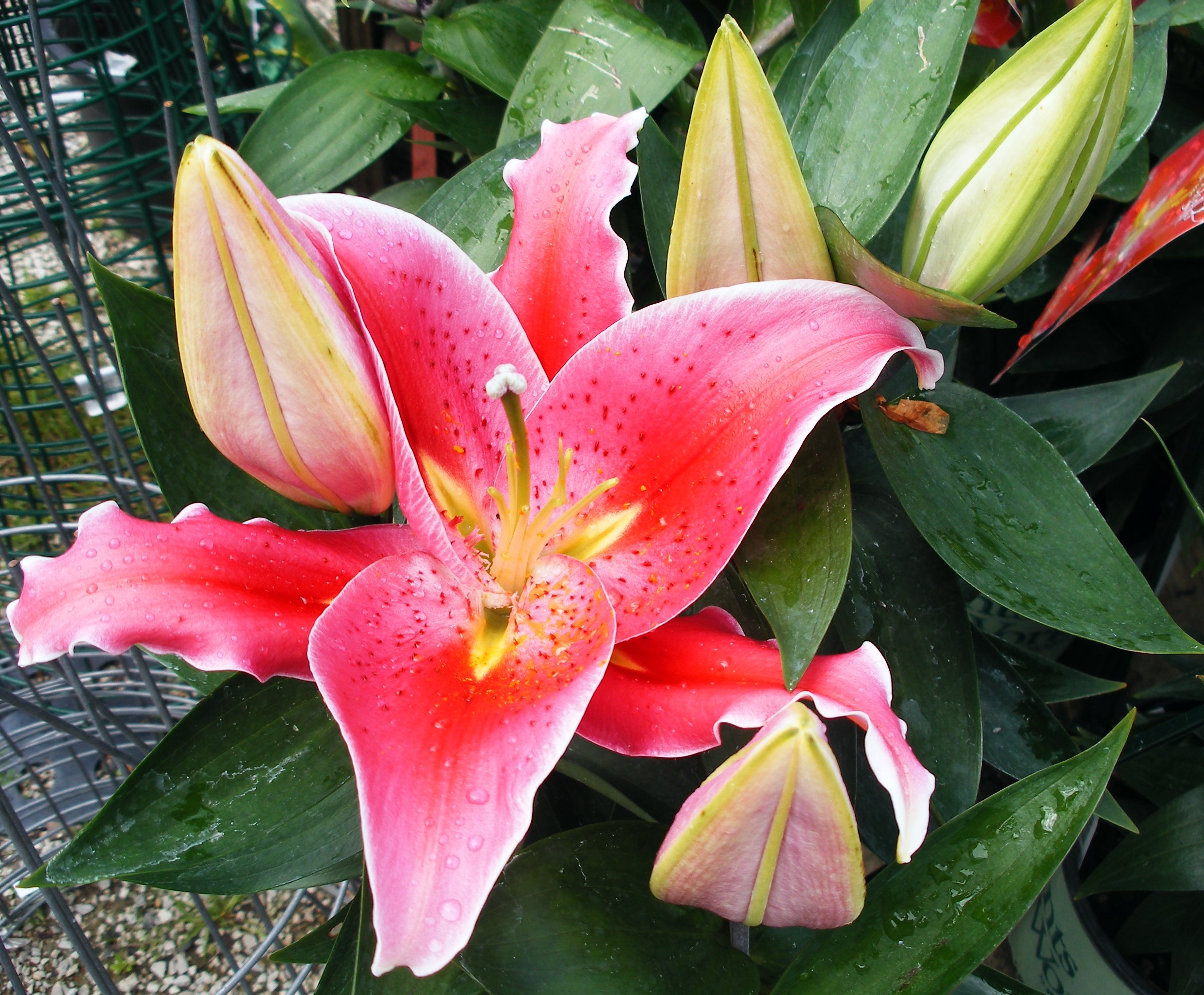
Cut lilies
Whether you grow your own or purchase them, lilies make great cut flowers to use in a vase or floral arrangements.
When cutting fresh lilies from your garden to enjoy indoors, leave 1/2 to 2/3 of the stem of the plant so it will not harm the plant for future bloom.
Care
For maximum enjoyment, cut them early in the morning, when they
are just about to open. Use a sharp knife or shears for a clean cut. Remove lower leaves that may be underwater and place your cut flowers in tepid water with floral preservative.
When the buds start to open, remove the anthers (male part of the plant with the yellow pollen). This will lenghten the life span of the flowers and avoid petal stain.
Take care not to get pollen on your clothes as it will also stain. If you do, brush it off with a dry paper towel, that should remove most of it.
Store your lilies in a cool room away from direct sun, cold drafts and heating vents.
Tight budsIf the buds are tight and you need opened flowers, here’s something you can do to coax them to open.
Recut the stems and place them in lukewarm water with cut flower food. Warmer water will open them faster. Another trick is to place a plastic bag over the whole bucket of stems to increase the humidity and temperature. The cut lilies should start to open in a day or so. Keep the bucket away from direct sun until you remove the plastic cover. When the buds start to open, remove the pollen from the stamens. This will prolong freshness and avoid any pollen stains.
If the buds don’t open, they may have been damaged from poor storage such as ethylene gas exposure. If the lilies start to open too fast, place them in a cooler environment away from light.
Optimally, cut lily* stems should last 7-14 days. Individual flowers last 4-7 days.
*depends on variety
Showing posts with label my garden. Show all posts
Wednesday, August 3, 2011
Tuesday, August 10, 2010
Ease the Transition between Home and Garden
"I treat nurseries like showrooms," says Patricia Wheeler, president of an interior design firm in Orlando, Florida, USA.
"I show clients plants and pots. I ask what colors please them. What shapes and textures. I like to get a sense of their exterior style, just like I do with interiors."
The disconnect between interior and exterior spaces in many homes has always bothered Wheeler.
"I do beautiful interiors. Landscapers do beautiful exteriors. but between them I see decks, patios, pool areas that are quite bare." she says.
To soften the harsh transition between home and garden she has been experimenting with container gardens, using potted plants as small accent pieces and major design components on porches, pool decks and terraces, and as a welcoming statement at the front door.
The placement of the correct plant in the right container, incorporating color, size and style, can make a powerful design statement, she says.
And container gardens are especially suited to areas with a climate like that of Florida, where plants can be selected to produce blooms or colorful foliage year around.
The daughter of a Minnesota grain farmer and a mother who loved to garden, Wheeler grew up with what she calls a "gardening habit." She planted trees and flowers, in the yard of her first Florida home in 1983. But it wasn't until 10 years ago, when she and her family moved into a house with a large back deck overlooking a lake that she discovered container gardening.
"I soon found it was a lot of hard work," she says. "In the summer it was so hot, the pots would dry out in a day. I was forever watering. And in winter, the frost could do more damage than I ever imagined possible in Florida." There also were tropical storms and hurricanes to contend with. Because plant containers can become dangerous missiles in high winds, smashing through windows and pool screens, they must be carried and stowed indoors for the duration of each storm.
But with research and experimentation, Wheeler found solutions to these problems. Drip irrigation, controlled manually or with an automatic timer, keeps container gardens properly hydrated. Arbors and pergolas provide partial shade in summer, but allow warming rays to reach a deck in the winter.
By adding misters, fans and fountains to your container-plant decor, she says, "You can transform a deck into a paradise, with butterflies and hummingbirds."
"I show clients plants and pots. I ask what colors please them. What shapes and textures. I like to get a sense of their exterior style, just like I do with interiors."
The disconnect between interior and exterior spaces in many homes has always bothered Wheeler.
"I do beautiful interiors. Landscapers do beautiful exteriors. but between them I see decks, patios, pool areas that are quite bare." she says.
To soften the harsh transition between home and garden she has been experimenting with container gardens, using potted plants as small accent pieces and major design components on porches, pool decks and terraces, and as a welcoming statement at the front door.
The placement of the correct plant in the right container, incorporating color, size and style, can make a powerful design statement, she says.
And container gardens are especially suited to areas with a climate like that of Florida, where plants can be selected to produce blooms or colorful foliage year around.
The daughter of a Minnesota grain farmer and a mother who loved to garden, Wheeler grew up with what she calls a "gardening habit." She planted trees and flowers, in the yard of her first Florida home in 1983. But it wasn't until 10 years ago, when she and her family moved into a house with a large back deck overlooking a lake that she discovered container gardening.
"I soon found it was a lot of hard work," she says. "In the summer it was so hot, the pots would dry out in a day. I was forever watering. And in winter, the frost could do more damage than I ever imagined possible in Florida." There also were tropical storms and hurricanes to contend with. Because plant containers can become dangerous missiles in high winds, smashing through windows and pool screens, they must be carried and stowed indoors for the duration of each storm.
But with research and experimentation, Wheeler found solutions to these problems. Drip irrigation, controlled manually or with an automatic timer, keeps container gardens properly hydrated. Arbors and pergolas provide partial shade in summer, but allow warming rays to reach a deck in the winter.
By adding misters, fans and fountains to your container-plant decor, she says, "You can transform a deck into a paradise, with butterflies and hummingbirds."
Subscribe to:
Posts (Atom)